
La Horde d'Or à Asnières 92600 une association de Jeux d'Histoire avec figurines : Règles historiques > DBA, LOTOW ... Règles fantastiques > Star Wars Miniatures Starship Battle, le Seigneur des Anneaux, WarHammer 40K, AT-43, WarHammer Battle ...
| WW II Aerial Combat by Mic McGoldrick and Bill Molyneaux | Une version Bombardements WWII. |
| Extrait du texte : The Board: The battle will be played on a hex mat. A 5' square is about the minimum for dogfights with fighters. A longer board will be needed for bombing runs. If you're doing a bombing run several hexes near the end of the board should be marked as the targets of the bombers. The hexes should be about 4" in size and the pattern can be drawn by tracing a cardboad hexagon. The hex pattern should be aligned so the two sides have a straight path of hexes to each other and any bombing targets. Deployment: Opposing sides should be deployed at least 4 hexes away. If you are doing a bombing run the bombers should start at one end of the table with their targets at the far end. The bombers should be in formation of three or four bombers and should try to stay in formation as they fly to maximize their protection. Note that heavy bombers will occupy two hexes. Fighters should start out grouped into squadrons. Planes should always be placed in hexes so that they face a hex side, not a corner. | 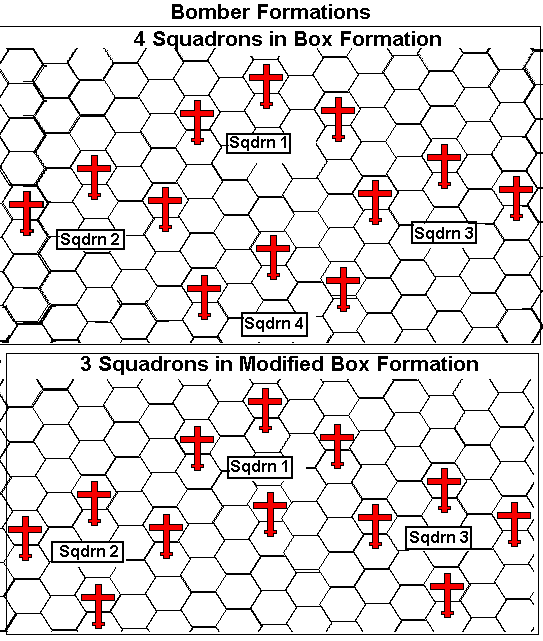 |
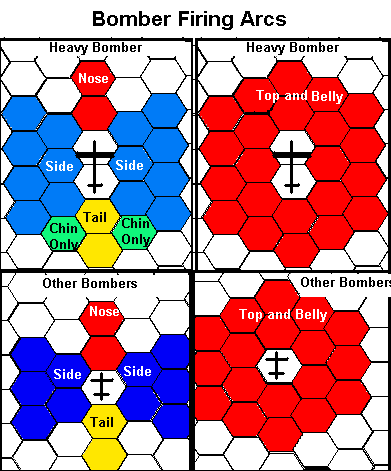 | Extrait (suite) : Rules Sequence of Play: Choose Cards: Turn over the top card in the deck. The fighter plane or bomber squadron that is assigned to that card will now move and shoot. Note that all bombers in a squadron move and shoot at the same time. This helps them to stay in formation. After each plane has completed its move and shoot draw the next card. Continue until every plane has had a chance to move then shuffle the deck and repeat the process. Remove the cards of planes that are shot down. Active Planes Move: Each plane has a Speed rating that indicates the maximum number of hexes the plane can move. Planes must ALWAYS move at least one hex. It costs one hex of movement to move forward or slip to the right or left. When a plane slips it doesn't change facing, it slides over and forward (see diagram). Planes also have a Turn rating which indicates the cost in hexes for a turn. A turn is perfomed by changing the plane's facing one hexside to the left or right and then moving forward (see diagram). Each plane also has an Immelman rating that indicates the cost in hexes for the plane to execute an Immelman turn (also known as a split S). When performing an Immelman turn the plane moves forward a number of hexes equal to it's Immelman rating then in the last hex it changes facing by 180-degrees. The hexes the plane moves through while performing the Immelman turn can NOT contain any other planes. Each plane can move and maneuver as it wishes as long as the total cost doesn't exceed its speed. Only one plane is allowed in each hex. |
Pour faire cette version au club j'ai deux bombardiers soviétiques Yak (photo  ), ou fabrication de B17 ? ), ou fabrication de B17 ? Une partie sera surement prévue à la rentrée. Guy |


/idata%2F0073810%2Favions%2F2-dogfight_-_la_horde_d__or_17_juin_2006.jpg)
/http%3A%2F%2Fwww.eaglesmax.com%2Fimages%2Feagles_max.gif)
/http%3A%2F%2Fwww.wargamesjournal.com%2Fimages%2Fknights_sky_thumb_1.jpg)
/idata%2F0073810%2Favions%2F05-scenario_dogfight_avec_bombardier-2007-02-03-la_horde_d_or.jpg)